







Intervention resources for teachers
Every learner brings unique strengths, experiences, and learning needs to the classroom. Because students develop skills at different paces, some may benefit from additional support at various points in their educational journey. Timely intervention helps address those needs and keeps learning moving forward.
Effective intervention ensures that every learner has access to the instruction and targeted support needed to succeed. Frameworks such as multi-tiered systems of support (MTSS) and response to intervention (RTI) provide a structured approach to identifying learning needs early and delivering the right level of support at the right time.
Browse our resources on intervention below and find articles to support your classroom. The articles below are organized into the following categories:
- Reading intervention
- Math intervention
- Multi-tiered systems of supports (MTSS) and response to intervention (RTI)
- Positive behavior interventions and supports (PBIS)
- Intervention customer stories and research
- More intervention resources
Research-based strategies and resources that help accelerate literacy growth.

Discover why research-based phonemic awareness interventions matter—and get strategies, sample intervention plans, and activities for K–12 students.

Unlock the full potential of repeated reading in intervention with these proven steps.

Learn more about a variety of intervention strategies, including reading comprehension and small-group reading intervention activities, to support differentiated instruction and tier 3 reading intervention.

Implement these evidence-based vocabulary intervention strategies and activities to support students in building vocabulary knowledge.

This article shares ideas on how to integrate the science of reading and evidenced-based instructional techniques in small-group reading instruction.

Explore reading intervention strategies for struggling readers, with practical approaches to help educators address reading challenges and support literacy development.

Implement these research-based reading interventions for elementary students to put students who have fallen behind back on track.

Read one teacher's top 10 instructional strategies to support science of reading in the classroom.

Discover these eight research-based reading fluency intervention strategies you can use in the classroom.
Evidence-based math intervention practices and strategies.

Try these math intervention activities and lessons to help K-12 students achieve grade-level proficiency in mathematics

Try these research-based math interventions for elementary students to help raise math achievement for students struggling in math.

In this article are six features that, when taken together, constitute a reinvention of intervention in the math classroom.

These math intervention strategies for struggling students provide lessons, activities, and ideas to support Tier 1, Tier 2, and Tier 3 math students who are two or more years behind grade level.

These RTI math Tier 2 and Tier 3 strategies strive to provide teachers with a systematic approach to early math intervention.
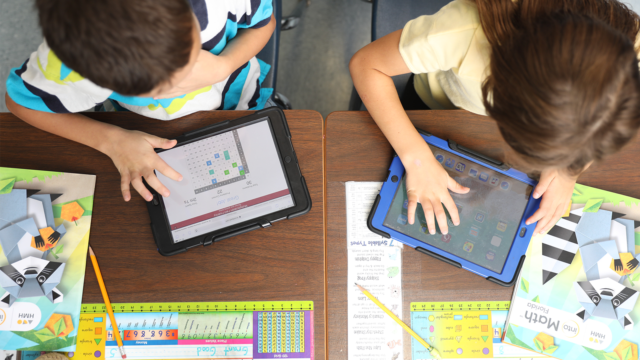
These small group instructional strategies for the math classroom will help ensure your small groups in math class are effective for you and beneficial for students.
Multi-Tiered System of Supports (MTSS) and Response to Intervention (RTI)
Resources on multi-tiered systems of support and response to intervention, including implementation strategies and instructional practices.

Learn what is Tier 2 intervention in education, including how it relates to MTSS, special education, Tier 1 core instruction, and Tier 3 intervention

The MTSS framework is just one piece of the full picture in supporting multilingual learners. Discover how asset-based approaches and intentional language scaffolding create stronger systems of support that help multilingual learners thrive.

Dr. Suzanne Jimenez, HMH's director of academic planning and data analytics, explains RTI in special education.

This blog post explores the question, “What is RTI in elementary school?” and how RTI serves as a powerful framework to ensure all students have the right support they need to succeed.

Explore 8 steps to developing an MTSS Plan. An MTSS implementation plan provides a framework for improving student achievement

In this blog, we answer the question, What Is the difference between MTSS vs. RTI?

Learn more about response to intervention (RTI), a three-tier system to identify how to help support your students in the classroom.

We break down the MTSS umbrella graphic and how it provides cover for students to prevent them from falling behind.

Learn to address students' unique academic and behavioral needs with different types of classroom interventions.

Why is RTI important in education? Read about several benefits of RTI in the classroom.

School districts across the country describe the RTI/MTSS pyramid as “flipped.” So HMH researchers created a replacement for the traditional triangle that better represents the skill diversity in today’s classrooms.

This article is to help with understanding MTSS, PBIS, and RTI, explaining the differences and strategies for providing students with effective intervention.
Positive Behavioral Interventions and Supports (PBIS)
Resources that help schools foster positive behavior, strengthen relationships, and support student success.

Explore 26 PBIS rewards ideas for individual students, classrooms, and school-wide incentives. Find success in teaching students positive classroom behaviors.

What is PBIS in education? Positive behavioral interventions and supports is an evidence-based, three-tiered framework that focuses on encouraging positive student behavior,

Learn how to implement PBIS in schools. Explore our brief PBIS implementation guide to help you develop your PBIS plan.

Explore 9 PBIS incentives for high school students that can promote positive reinforcement. Offer an easy and fun way to help manage behavior.

Learn more about PBIS Tier 3, the most intensive of the PBIS framework. Tier 3 behavior interventions help students to develop crucial life skills.

Discover 17 PBIS incentives for middle school students. It’s important to create incentives based on your students’ interests.
Intervention customer stories and research
Research findings and district examples that illustrate how schools are approaching academic and behavioral intervention.

Discover how one school uses data-driven intervention to accelerate learning, close gaps, and boost student confidence.

Learn how Arlington ISD in Texas strengthened its MTSS model with data-driven practices and high‑impact interventions like Read 180 and Math 180.

Dorchester School District Two in South Carolina uses MTSS along with Read 180 to ensure all students find success in reading.

Ms. Madge Alexandre, Miami-Dade reading teacher and Read 180 user
Miami-Dade educators share how they guided and empowered students in becoming better readers with Read 180.

Discover how Loudoun County Public Schools leveraged data-driven strategies, collaboration, and aligned initiatives to focus on student growth for all learners in this case study.

When Tarwo Konbloa came to the United States from a Cote d'Ivoire refugee camp at age 11, he struggled in school. But in time his academics improved through a mix of perseverance, intervention, and dedicated teachers.

A case study of Math 180 is described and explained as part of the research that HMH conducts to test its intervention products
Additional articles and educator resources that support intervention.

Compare intervention vs remediation in education, including how they're different, why they're important, and strategies and activities to implement them

Read 180 is an intervention reading program notably known for helping Grades 3–12 students gain one or more years of average growth in one year. Discover the answers to Read 180 frequently asked questions to learn more about this solution.

Find out the answers to some of the most frequently asked questions about Math 180, an intensive intervention program known for helping to raise student achievement in math by more than two years in one school year.

Explore 7 small-group intervention strategies, plus download a free lesson plan template to support targeted instruction.

See how special education as an intervention offers a powerful lens for supporting students with learning differences within a broader system of instructional support.

Learn how academic intervention can help close learning gaps and improve student academic achievement.

Learn how district leaders can scale effective interventions to drive student success. Explore strategies for system coherence, professional learning, and accountability to improve student outcomes.
Learn to address students' unique academic and behavioral needs with different types of classroom interventions.

Intervention in school is defined, and key insights into how to provide effective intervention are provided.

Explore 11 evidence-based instructional interventions and instructional intervention examples that you can use today to help your students succeed.

Learn more about intervention strategies to help improve student outcomes in your school and district.

See the math that explains how an intervention treatment program for students offers a long-term return on investment.
Get the guide “Beyond Intervention: How to Make Proficiency Stick for Every Learner.”
This blog, originally published in 2024, has been updated for 2026.
***
Unlock whole-brain reading through Read 180, the leading reading intervention program for Grades 3–12.
Looking to unlock mathematical learning in the students who need it most? Explore Math 180, our revolutionary approach to math intervention for students in Grades 3–12.
Related Reading
Learn more about intervention strategies to help improve student outcomes in your school and district.
Explore reading intervention strategies for struggling readers, with practical approaches to help educators address reading challenges and support literacy development.
These math intervention strategies for struggling students provide lessons, activities, and ideas to support Tier 1, Tier 2, and Tier 3 math students who are two or more years behind grade level.